Posts

The Children’s Haven

Image
The Together Trust has a a series of books in its archive designed to promote the workings of the charity to the Manchester and Salford community. Originally seen in a section of a magazine written by the charity as an offshoot to its committee's Christian missionary interests, known as The Christian Worker, it expanded into a magazine wholly dedicated to the charity from 1895 when it became  The Children’s Haven.  The latter aimed to disseminate news of the charity, encourage donations and advertise events and meetings to the public.  Children’s page from The Christian Worker

Thomas' Story

Image
Today we tell a story from the Children’s Haven in regards to Thomas, a Refuge boy who ended up on the charity’s training ship, the Indefatigable . Thomas first came to the attention of the Manchester and Salford Refuge in 1896 when he turned up at midnight at the open-all-night shelter on Chatham Street, accompanied by a policeman. At the tender age of 12 years he had been sleeping on the streets of Manchester as he had nowhere else to go. Thomas on admittance

Separation in the nineteenth century

Image
Thousands of children lived in extreme poverty in Manchester and Salford during the nineteenth century. In the days before the welfare state there were few systems in place to provide aid to those who were unable to work. For parents with young children and families to raise, life could be incredibly tough. So what were the options available to those living on the breadline?  Manchester Street Lads

Harry and the Gallipoli Campaign

Image
With the 100 year anniversary of the start of the Gallipoli Campaign coming up on Saturday it seemed apt to have a look at this famous campaign and its links with the Manchester Refuges. The Campaign intended to secure the Gallipoli peninsula, a strait which provided a sea route to the Russian Empire. A naval attack was launched with the aim of capturing the Ottoman capital of Constantinople . This was eventually repelled and after eight months of fighting, with many casualties on both sides, the land campaign was abandoned and the invasion force was withdrawn to Egypt. Marines

The Refuge and the Graveyard

Image
On such a beautiful Manchester day what could be more wonderful to blog about than its stunning churches and surrounding landscape. That’s right today’s blog is all about graveyards... Leonard Shaw’s Grave stone, St Paul’s Church, Kersal Moor  

Youth Indentures

Image
On a journey to the archives this week, one case file turned up a new document. Most of these case files are fairly similar in content. All contain the now familiar admission form detailing child’s circumstances, parent’s names, previous addresses etc. Other common documents include visitor’s reports, letters from concerned individuals and indentures that are signed by a parent or guardian of the child. Parent Indenture, 1903

Ernest's Story

Image
'When the stones under his bare feet are frozen he is sent out to wander, to plead, to pester, to get thrust out of the way and cursed by some, to get for his match-box the penny for which all the joy and health of his childhood are being sold' - Reverend Benjamin Waugh , Contemporary Review, July 1888.  Between 1885 and 1894 the Manchester Refuges operated a branch of work called the Manchester and Salford Society for the Prevention of Cruelty to Children . It was a predecessor to the NSPCC investigating and prosecuting neglectful or abusive parents in the courts. The establishment of a Manchester branch by the NSPCC in 1894 brought an end to this work, but not before 9,922 children had been assisted. After 1894 the charity had a close working relationship with the NSPCC and the admission books continued to tell stories of children whose parents were prosecuted by the courts.  Letterhead for branch

On board the S.S.Victorian

Image
During a trip to Liverpool Maritime Museum last week, it was impossible to not take a look at the large Titanic exhibition they have on display. The devastation of this event is well known and got me thinking to our own children who made the same trip every year across the icy Atlantic towards Canada. On the 12 April 1912, the S.S. Victorian set sail from Liverpool to make one of its frequent trips across the Atlantic to Halifax, Canada. On board were 33 boys who were starting a new life in Ontario. 1897 Emigration party outside of Manchester Town Hall

Tom Thumb and Arthur

Image
As regular readers to this blog will know we have thousands of entries in our admission books for children who came under our care. Many have similar sad upbringings; death of parents or belonging to families which could not afford to bring them up, at a time before any social welfare was introduced. The charity however, took in any child in need of aid and some had unusual backgrounds. Admission Book 1892

A pioneering camp

Image
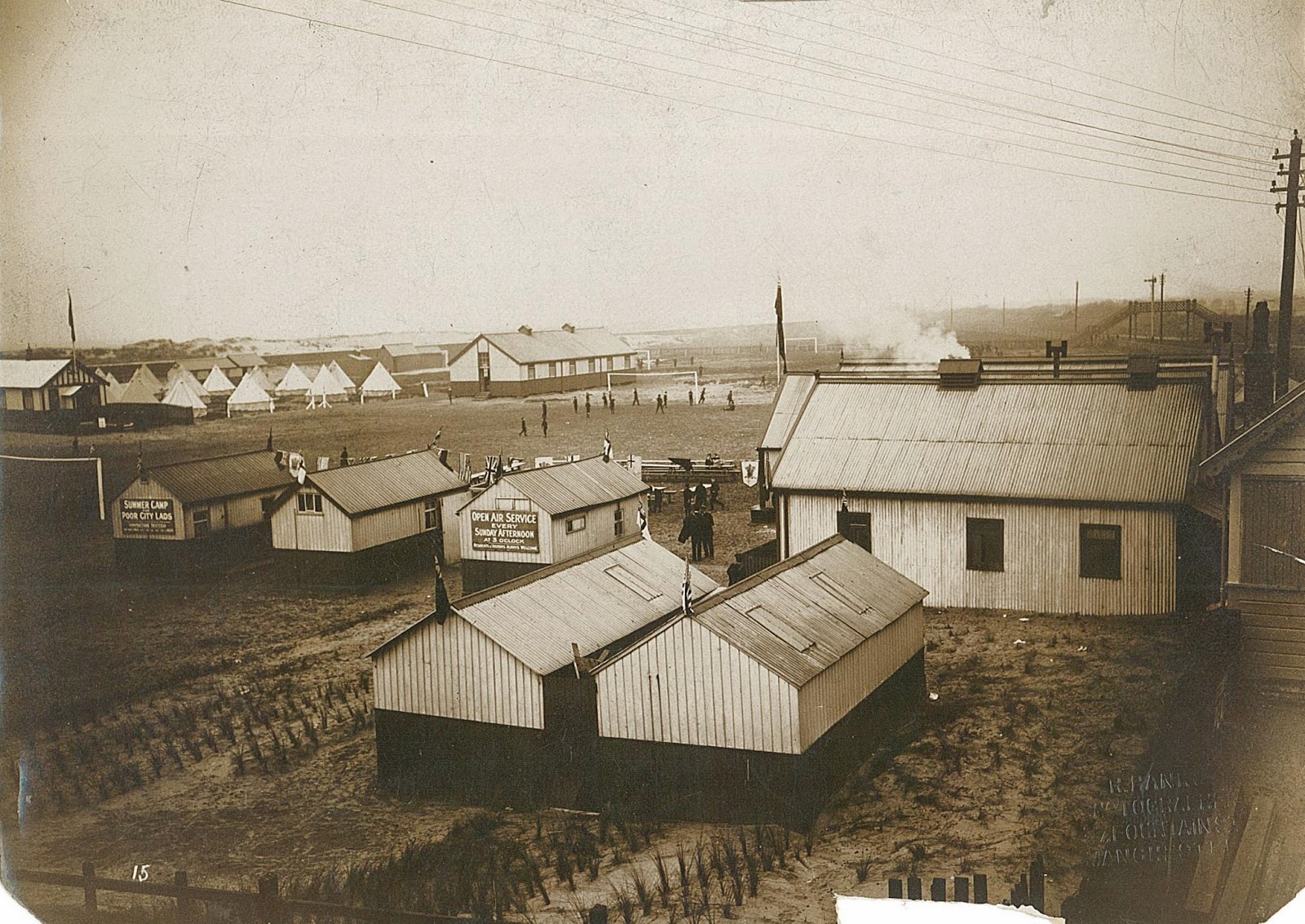
After the last few days of snow and ice I felt a need for my thoughts to turn to warmer days and the approach of spring (a little premature but a delightful thought all the same!) And what better way to do that then to revert back across to Birkdale and have another look at our dear old summer camp and the thousands of children who were given a much needed break by the seaside. Summer Camp, Birkdale, 1900s

More on the Moody party

Image
We told a story all the way back in 2011 about twelve lads who set sail from our orphans homes across to Northfield in Massachusetts under the guardianship of the well known preacher Dwight Lyman Moody . The recent digitisation of our orphan home books by Borthwick Archives , at the end of last year, has revealed more information about the younger children who entered our homes, including the individual circumstances of the Moody party. 

145 years young

Image
Somehow we find ourselves in 2015. I was reminded yesterday on Twitter (quite ashamedly) that the charity had turned 145 years old. England has changed a great deal in those 145 years but unfortunately not quite enough for the Together Trust to no longer be needed. It seems apt today to have a look at how the Refuge was viewed back in 1870 when it first began and how it fulfilled a need, long felt in Manchester, of providing a home and temporary employment for the destitute lads of the city.  First Home, Quay Street